Ask any early-childhood expert how young children learn best, and the answer is the same: through play. Far from being "just fun," play is the most powerful learning tool of the early years. Here's why — and what good play-based learning looks like.
What is play-based learning?
Play-based learning means children learn through guided and free play rather than formal worksheets and drills. Teachers thoughtfully design playful experiences — building, role-play, art, stories and games — that quietly teach language, maths, science and social skills.
What play develops
- Creativity — imagining, inventing and expressing
- Critical thinking & problem-solving — testing ideas and finding what works
- Communication — talking, negotiating and storytelling
- Motor skills — building, drawing, cutting and climbing
- Curiosity — the lifelong love of finding out
Types of play
Free play lets children lead and imagine. Guided play gently steers toward a learning goal. Structured play uses games and activities with clear rules. A good preschool blends all three across the day.
Play and academics
Play and "real learning" aren't opposites. Children count blocks, sound out words in a story, sort shapes by colour, and measure with cups in the water table — building genuine early literacy and maths while they're fully engaged.
Play and bilingual language
Play is a brilliant way to learn language. Songs, role-play and stories in both Arabic and English let children absorb new words naturally — far more effectively than memorisation.
When learning feels like play, children don't just learn more — they learn to love learning.
At Smart Minds
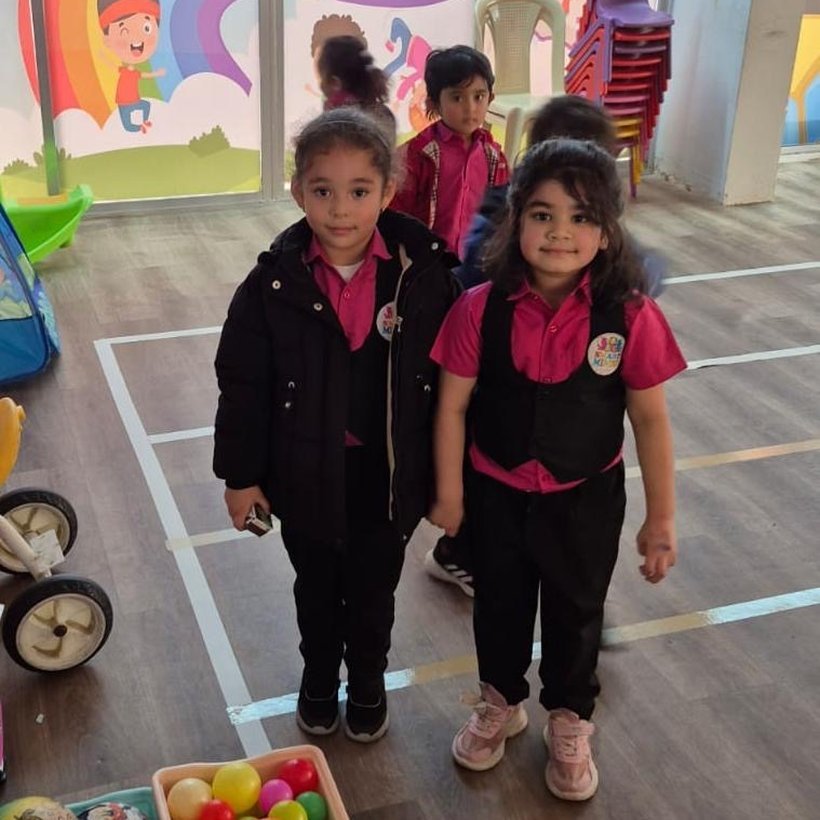
Our joyful, bilingual curriculum gives every activity a purpose, so children build strong foundations while doing what they do best — playing. Book a visit to see play-based learning in action.